
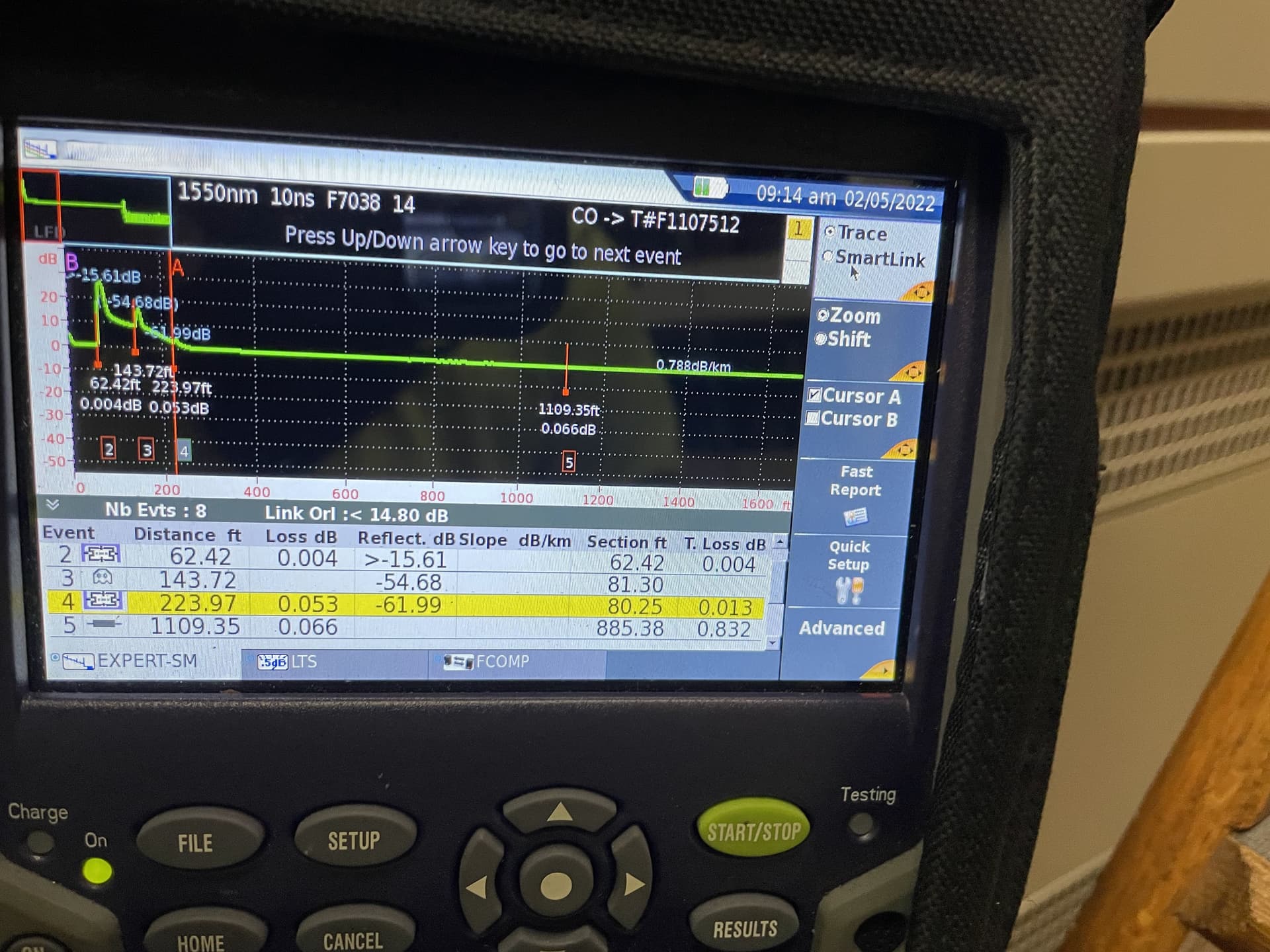
There are two ways to permanently join fiber optic cables: fusion splicing and mechanical splicing. Both create a joint, but they differ significantly in loss performance, cost, required equipment, and appropriate use cases.
Fusion Splicing
Fusion splicing uses an electric arc to melt and weld two prepared fiber ends together. The fusion splicer automatically aligns the fibers using core or cladding alignment optics, fires the arc, and then displays the estimated splice loss. The process takes 60–90 seconds per fiber and produces a joint with typical losses of 0.01–0.1 dB.
Fusion splices are permanent, mechanically stable, and have essentially indefinite service life under normal conditions. They are the industry standard for all outside plant work, carrier networks, long-haul fiber, and any application where low loss and reliability are non-negotiable.
The downside of fusion splicing is equipment cost. A professional fusion splicer costs $3,000–$15,000 depending on capability. This is why hiring a qualified contractor is far more economical for most projects than purchasing equipment for occasional use.
Mechanical Splicing
Mechanical splicing uses a pre-fabricated alignment sleeve filled with index-matching gel to hold two prepared fiber ends in alignment. No electricity or fusion is involved. The splice takes about 5 minutes to complete and requires only a fiber cleaver and the mechanical splice connector - no fusion splicer.
Typical mechanical splice loss is 0.2–0.5 dB, compared to 0.01–0.1 dB for fusion. This higher loss limits their use to shorter runs and lower-bandwidth applications. Mechanical splices are also less durable over time - the index gel can dry out, and the splice is susceptible to moisture ingress.
Mechanical splices are most useful for emergency temporary repairs (to restore service while permanent fusion splicing is arranged), very short indoor runs, and situations where a fusion splicer is not available.
Which Should You Specify?
Use Fusion
- → All OSP and long-haul plant
- → Any run over 500 meters
- → Carrier or enterprise grade networks
- → FTTX/FTTH deployments
- → Permanent installations
Mechanical May Work
- → Emergency temporary repair
- → Short indoor runs under 100m
- → Low-bandwidth applications
- → Single-strand test or tap point
- → Where no fusion splicer is available